
Press brake safety depends on protective systems, correct setup, operator training, and daily maintenance. During bending, the punch and die generate substantial force, and the workpiece may shift, rotate, or develop sharp edges. A safe press brake combines appropriate guarding, reliable control functions, suitable tooling, and clear operating procedures — and all four must work together.
For buyers, safety should be evaluated alongside tonnage, length, and accuracy before purchase. JialiPress press brakes are designed with these safety requirements integrated into the machine configuration from the factory.
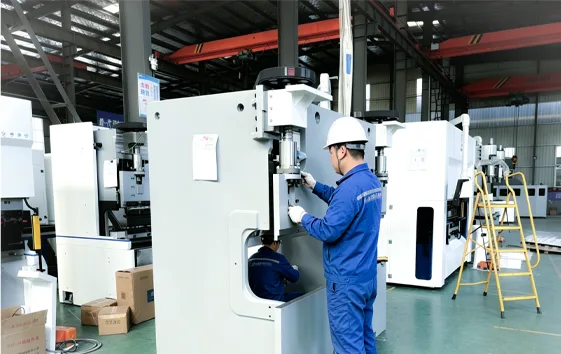
Why Is Press Brake Safety Important?
The ram moves toward the worktable with enough force to cause severe hand injuries. Several hazards require attention:
- Crushing and pinching: The punch, die, and moving ram can trap hands and fingers
- Workpiece movement: Large or heavy sheets may shift, tilt, or fall during bending
- Sharp edges: Cut sheet metal can cause lacerations during loading, positioning, and unloading
- Unexpected machine movement: Incorrect settings or control errors can expose operators to moving parts
- Material handling: Long or oversized workpieces may require additional support
A risk assessment should cover the entire operation — loading, setup, bending, unloading, cleaning, and maintenance. Automated cells require additional attention to robot movement and work envelope access.
What Safety Features Make a Press Brake Safer?
A safe press brake uses protective measures suited to its design, tooling, workpieces, and operating method. Common safety features include the following.
| Safety Feature | Main Function |
| Emergency stop | Initiates a stop when a hazardous situation occurs |
| Safety light curtain | Detects interruption in a monitored area, triggers protective response |
| Physical guards | Prevent access to hazardous moving parts |
| Safety interlocks | Stop machine functions when protective conditions are not met |
| Guarded foot pedal | Reduces risk of unintended activation |
| Two-hand control | Requires two-hand operation for designated functions |
| Safety-related CNC functions | Monitor or control defined operating conditions |
These features are not interchangeable — each addresses a specific risk. JialiPress machines include emergency stops, light curtains, guarded foot pedals, and safety interlocks as standard or optional features depending on the model.
The complete system should be designed and validated for the machine’s intended use. OSHA provides guidance on press brake safeguarding, while ANSI B11.3 addresses safety requirements for power press brakes.

How Does a Safety Light Curtain Protect Press Brake Operators?
A safety light curtain monitors a defined protective field with beams of light. When an object interrupts the field, the system stops or prevents hazardous ram movement. Its protective field must be positioned according to the machine’s stopping performance, access routes, tooling, and bending process — a front-mounted curtain may not protect rear or side access.
Some applications require muting or blanking functions to accommodate the workpiece; these must follow the approved safety design. Operators should never bypass a light curtain because it slows production — if it repeatedly interrupts, investigate the setup.
What Safety Rules Should Operators Follow?
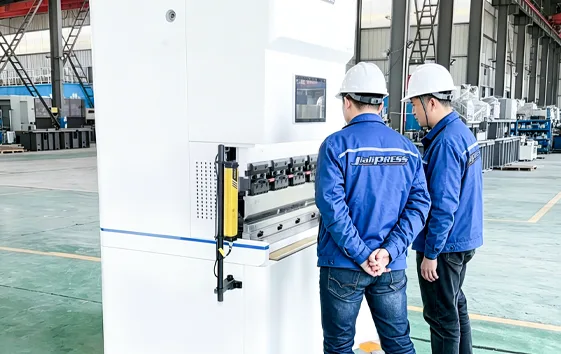
Before bending, check that:
- Emergency stops and protective devices function as intended
- Punches, dies, clamps, and workpiece supports are correctly installed
- The program and bending parameters match the job
- The work area is clear of loose tools, scrap, and obstacles
During operation:
- Keep hands outside hazardous areas
- Support large workpieces with suitable equipment
- Wear appropriate PPE, including cut-resistant gloves where required
Never:
- Adjust tooling or clean hazardous areas while the machine is moving
- Bypass or disable safety devices
- Resume production after an alarm or safety-device fault until the cause is assessed
Follow lockout/tagout procedures before maintenance.
Daily Press Brake Safety Checks
A daily inspection helps identify problems before they lead to an incident. The exact checklist should follow the machine manufacturer’s instructions and the factory’s risk assessment.
| Inspection item | What to check |
| Emergency stop | Check the function according to the approved test procedure |
| Light curtain or other safeguarding | Confirm the device is operational and correctly positioned |
| Foot pedal and controls | Check for damage, unintended activation, or abnormal response |
| Guards and interlocks | Confirm protective components are present and functional |
| CNC system | Review alarms and investigate safety-related faults |
| Tooling and workholding | Check installation, clamping, and visible damage |
| Work area | Remove scrap and obstacles that could interfere with safe operation |
If a safety device fails, stop using the machine and report the issue. Repairs and return-to-service checks must be completed by qualified personnel.
How Do Safety Considerations Differ Between Press Brake Types?
Hydraulic, electric servo, and CNC press brakes share the same fundamental hazards around tooling and workpiece handling, though their drive systems and control architectures differ.
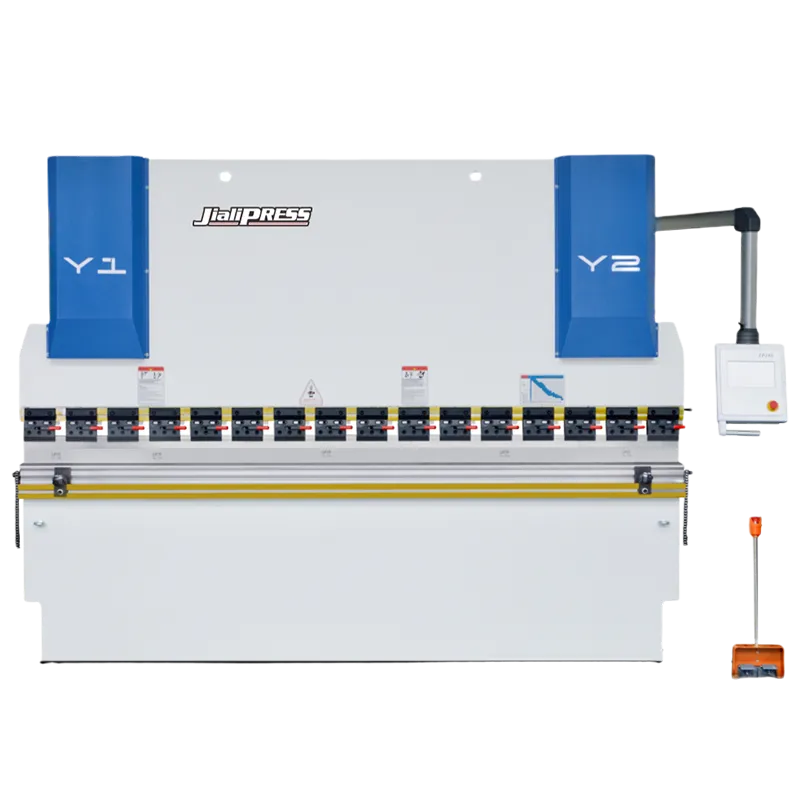
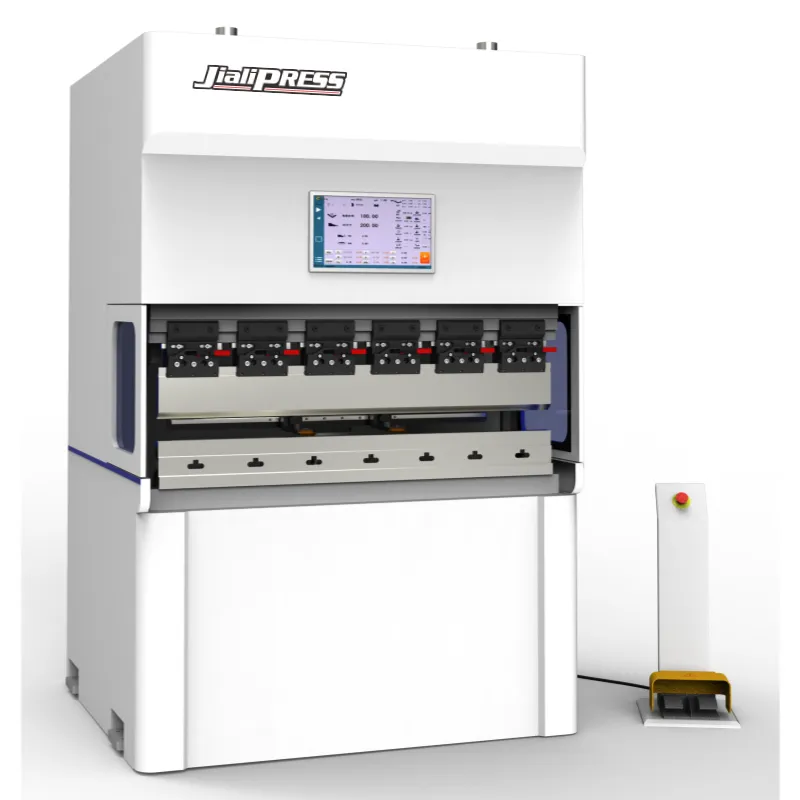
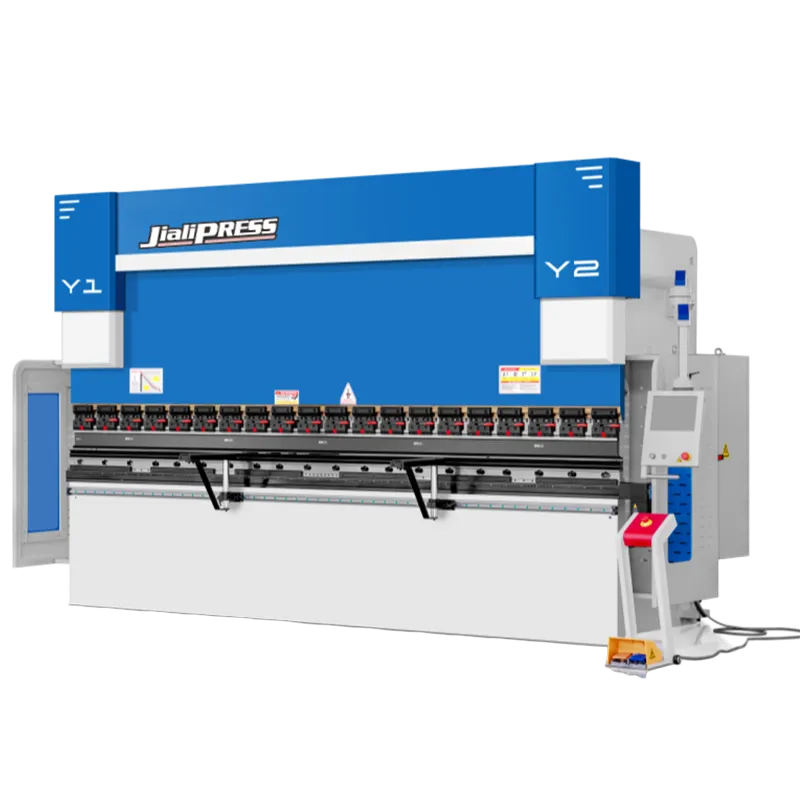
Hydraulic: Attention to ram movement, hydraulic system condition, and safety functions. JialiPress hydraulic press brakes offer light curtains, interlocks, and guarded foot pedals configured to the production environment.
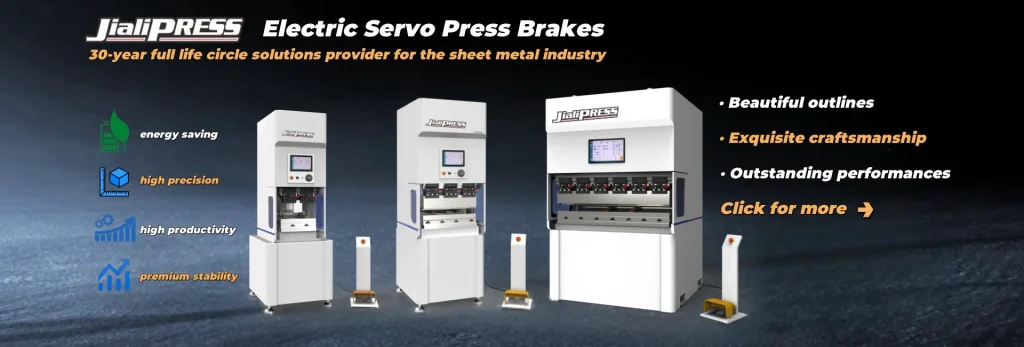
Electric servo: Use servo drives rather than hydraulic actuation. Assess guarding, motion control, and stopping behavior — an oil-free drive does not automatically make a machine safer.
CNC: Incorporate programmable motion, automatic sequences, and advanced positioning. Safety assessment must cover both manual and automated modes. JialiPress CNC press brakes support programmable safety-related functions and can be configured for automated bending cells with perimeter guarding.
How Do You Choose a Press Brake With Good Safety Design?
Before choosing a machine, ask the manufacturer:
- What protective systems are included? Confirm the emergency stop, guarding, interlocks, and other safeguards relevant to the proposed configuration.
- Is the light curtain suitable for the intended work? Check its coverage, installation, stopping performance, and compatibility with the planned tooling and bending operations.
- What safety functions does the control system support? Request documentation explaining relevant safety functions and operating modes.
- Which standards and regulations apply? Confirm the requirements for the destination market and request relevant conformity documentation.
- What training and technical support are available? Operators and maintenance personnel need clear instructions for safe setup, operation, inspection, and fault handling.
Ask for the safety configuration to be documented in the quotation. JialiPress buyers can discuss intended material, sheet dimensions, production volume, and bending process at our website — safety requirements are reviewed alongside technical and production capabilities.
Conclusion: What Makes a Press Brake Safe to Operate?
A safe press brake combines guarding, reliable safety controls, correct tooling, regular inspections, and trained operators. Protective measures must work together as a system designed for the actual bending operation.
For buyers, reviewing safety documentation and confirming the configuration before purchase establishes a safer foundation. To discuss press brake safety requirements for your production environment, contact JialiPress for a configuration review.
Press Brake Safety: Common Questions Answered
What is the most important safety feature on a press brake?
No single feature is most important. Emergency stops, light curtains, interlocks, and guarding work together — removing any one creates a gap.
Can a light curtain replace physical guards?
No. A light curtain protects its monitored area; physical guards are needed where it cannot provide coverage.
What standards apply to press brake safety?
In the US, review OSHA requirements and ANSI B11.3. In Europe, confirm applicable machinery regulations and relevant safety standards.


