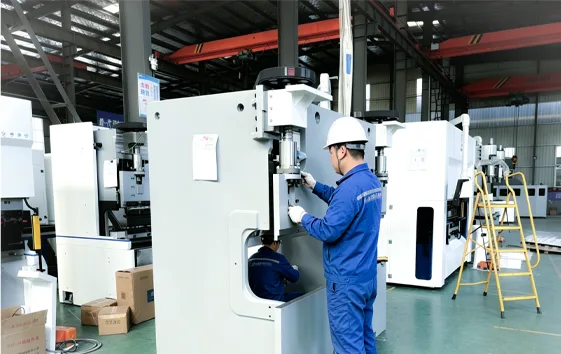
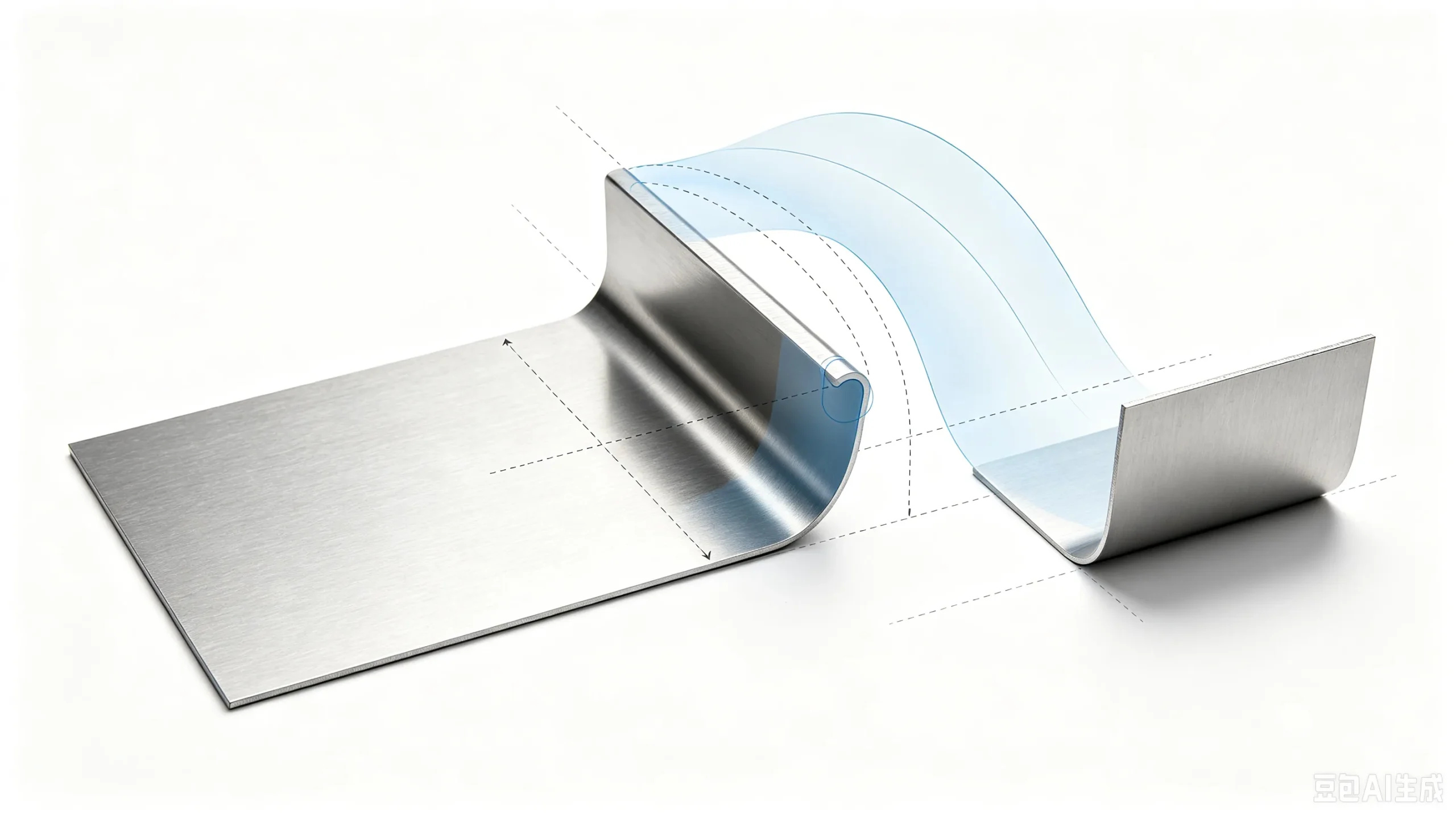
A press brake is core sheet metal fabrication equipment designed to bend flat metal sheets into custom profiles, angles and enclosures. It shapes metal through controlled plastic deformation, and serves widely across many industries. Common applications include electrical cabinets, machinery frames, automotive components, construction metal parts and kitchen equipment.
What Is a Press Brake and What Does It Do?
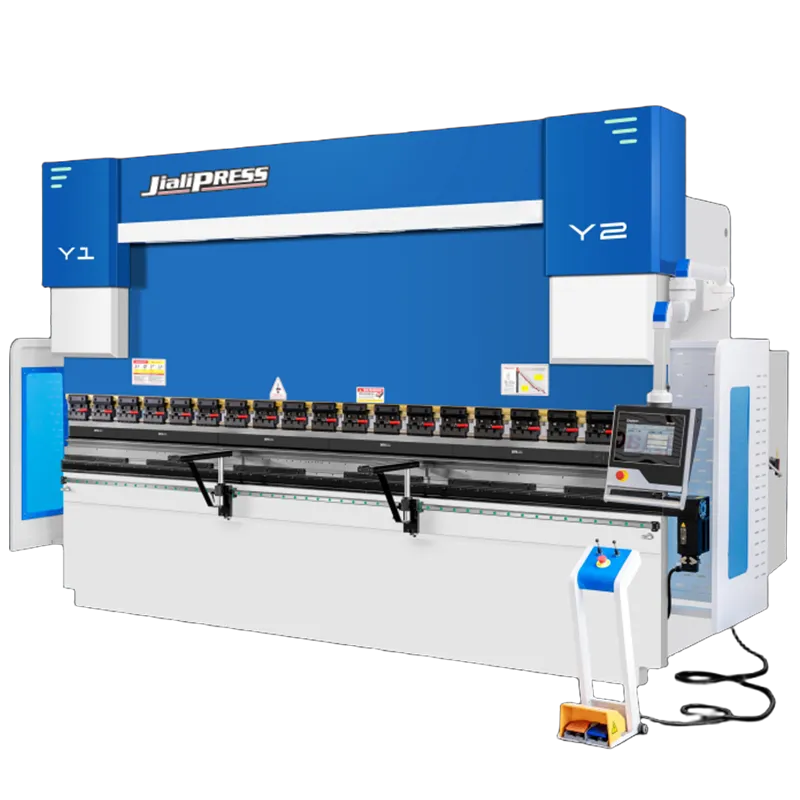
A press brake is a machine tool designed to bend sheet metal into precise angles and shapes by applying force through a punch (upper tool) and a die (lower tool). The sheet is positioned between the punch and die, and the ram moves downward to force the material into the die cavity, creating a controlled plastic deformation at the bend line.
Press brakes are primarily used for bending sheet metal such as mild steel, stainless steel, aluminum, and copper. Common applications span automotive parts, electronics enclosures, HVAC ducting, construction hardware, and general job shop fabrication.
How Does a Press Brake Work Step by Step?
Step1: Sheet Positioning and Backgauge Alignment
Operators place the raw metal sheet flat onto the machine worktable, aligning the workpiece edge against the backgauge reference. The sheet must sit fully on the table surface without tilting to avoid bending errors.
Step2: CNC Parameter Setup for Bend Angle and Ram Stroke

On the CNC controller, programmers input core parameters including target bend angle, ram stroke depth, bending force, and backgauge coordinate. The system will also preload springback compensation values according to the metal material and thickness.
Step3: Backgauge Sets the Bending Position

The motor-driven backgauge automatically slides to the preset coordinate. It acts as a fixed stopper to lock the sheet, ensuring the bend line stays at the exact required position for consistent repeat bending.
Step4: Upper Punch Descends into the V-Die

The ram carries the upper punch down at a controlled speed. The punch presses the sheet metal into the V-shaped lower die cavity. Continuous pressure makes the metal produce stable plastic deformation and forms the target bend angle.
Step5: Ram Retracts to Finish One Bending Cycle
Once the stroke reaches the preset depth, the ram lifts the punch upward and releases pressure on the workpiece. Operators can then reposition the sheet, and one full bending cycle finishes.
How Do Main Press Brake Components Work Together?
- Machine frame & worktable: The rigid frame supports all bending loads. The worktable holds the sheet steadily during forming.
- Ram, upper punch and lower die: The ram drives the punch downward. Punch and die define the bending shape and control material deformation.
- Backgauge system: This adjustable stopper locates the sheet and guarantees consistent bend positions across batches.
- Drive system: It supplies power to push the ram with controlled tonnage and speed.
- CNC control system: The digital brain of the machine. It stores programs, controls ram movement, backgauge travel and compensates for springback.
During operation, the rigid machine frame bears all bending pressure while the solid worktable firmly supports the sheet metal to ensure overall stability. The drive system outputs controlled power to drive the ram and upper punch downward steadily, cooperating with the fixed lower die to squeeze the sheet metal and achieve precise plastic deformation.
Meanwhile, the adjustable backgauge accurately locks the workpiece position to maintain consistent bending benchmarks throughout batch production. As the intelligent core of the machine, the CNC system stores processing programs, precisely regulates ram travel, bending tonnage and moving speed, and automatically compensates for material springback in real time. The seamless collaboration of all components delivers stable, repeatable, and high-precision bending results.
Key Factors That Affect Press Brake Bending Quality
- Material type and tensile strength: High-strength steel requires higher tonnage and produces more springback.
- Sheet thickness: Thicker plates need more bending force. Thin sheets are easier to deform but more sensitive to positioning errors.
- Bend length: Longer bending lengths increase the required machine tonnage.
- V-die opening width: The V slot size directly influences inner bend radius and tonnage demand.
- Bending method: Air bending, bottom bending and coining create different forming outcomes.
- Machine tonnage: Overloading the press brake will cause frame deflection and poor angle consistency.
- Springback: Metal springs slightly after bending, which must be compensated in CNC programs.
How Press Brakes Perform Multiple Sequential Bends
Many sheet metal parts require multiple bends at different positions and angles. The process follows a systematic sequence.
1. Define the Optimal Bending Sequence
The operator or CNC program decides the order in which bends are made to avoid collisions between the workpiece and the tooling. For complex parts, 3D simulation software can verify the sequence before production.
2. Backgauge Repositioning for Each Bend
After the first bend is complete, the back gauge automatically moves to the next programmed position. For multi-bend parts, the back gauge may operate on six or more axes to position the sheet accurately for bends on different planes.
3. Complete the First Reference Bend
The first bend establishes the reference geometry. Its accuracy influences all subsequent bends, making it essential to verify the angle and position before proceeding.
4. Execute Subsequent Bending Operations
They follow the programmed sequence. The operator repositions the sheet against the back gauge for each bend. The CNC system adjusts ram depth and back gauge position automatically.
5. Final Part Inspection
It confirms that the finished part meets the required dimensions and angles. This includes checking bend angles, flange lengths, and overall part geometry.
Practical Tips to Improve Press Brake Accuracy & Stability
- Select the right machine tonnage: Always calculate the maximum tonnage your jobs require and add a safety margin of 20 to 25 percent. Running consistently at full capacity shortens machine life and reduces accuracy.
- Set bending parameters correctly: Material type, thickness, bend angle, and die opening must all be entered accurately into the CNC system. Incorrect parameters lead to wrong ram depth and inaccurate bends.
- Maintain proper positioning: The back gauge must be calibrated regularly, and the sheet must be held firmly against the gauge stops during bending.
- Adjust parameters based on material characteristics: Different materials exhibit different springback behavior. The CNC system allows operators to fine-tune the overbend angle for each material type.
- Use an appropriate control system: JialiPress equips its electro‑hydraulic and electric‑servo press brakes with modern CNC controllers supporting optional laser angle measurement. These can provide real‑time feedback and automatic springback correction, reducing operator intervention and improving consistency.
Conclusion
A press brake turns flat sheet metal into finished profiles through coordinated movement of frame, ram, tooling, backgauge and CNC controls. Understanding its working principle, different drive types and key influencing factors helps fabricators select suitable equipment, set up programs correctly and reduce defective workpieces. Whether you handle simple single-angle bending or complex multi-batch parts, mastering how a press brake works is the foundation of stable sheet metal production.
As a professional press brake manufacturer with over 30‑year manufacturing experience, JialiPress provides both hydraulic and electric servo press brakes built to deliver reliable performance for all your sheet metal bending projects.