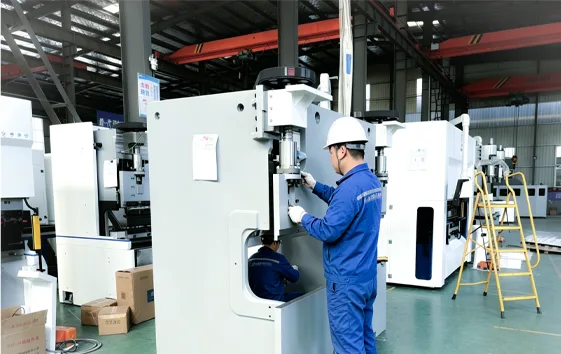
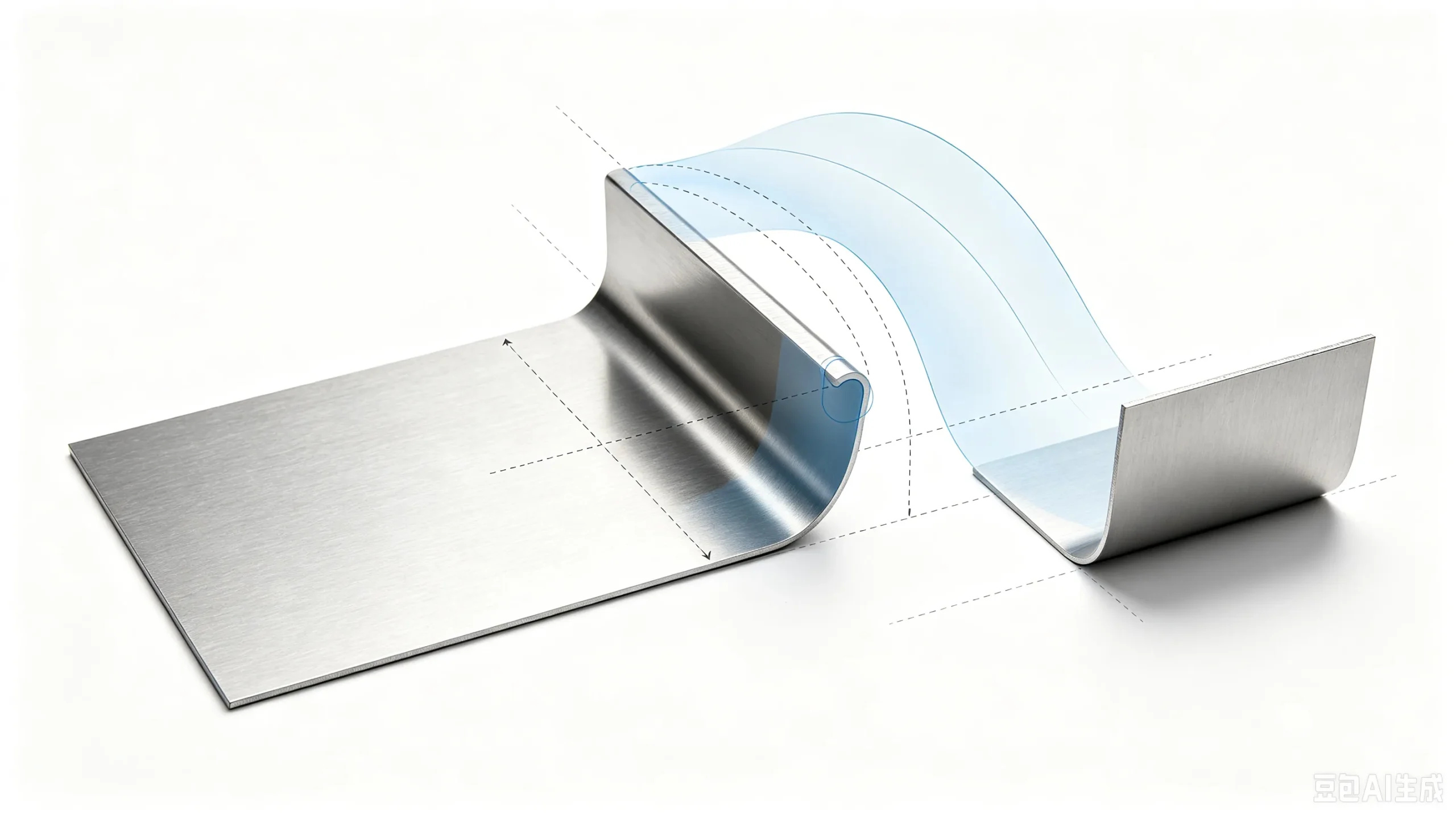
The sheet metal fabrication industry is seeing growing demand for clean workshop environments, energy savings, and simplified equipment maintenance. Traditional hydraulic press brakes impose ongoing hidden costs on small and mid‑sized workshops—oil leakage risks, frequent fluid replacement, and large floor space occupancy. The single servo electric press brake fills this gap with a cost‑effective, all‑electric alternative.
How Does a Single Servo Electric Press Brake Work?
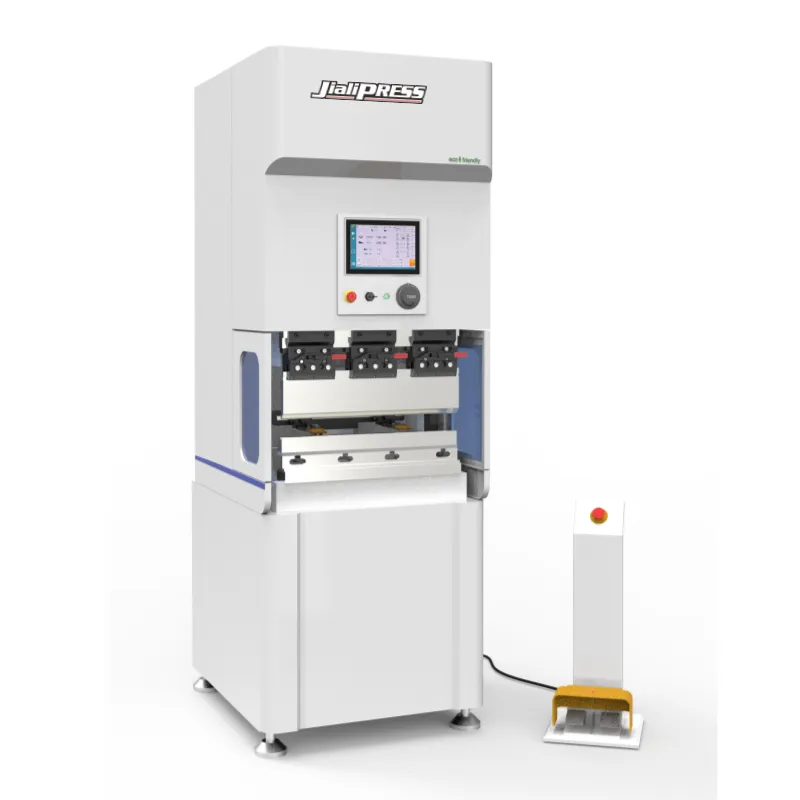
The machine uses a single servo motor as the primary power source, converting rotary motion into linear movement of the ram via a precision ball screw. The CNC system provides closed‑loop control over the entire cycle—ram descent, bending dwell, and return stroke.
- Oil‑free hydraulic design: No pump, tank, piping, or seals required, eliminating oil leaks and workshop contamination at the source.
- On‑demand power: The servo motor operates at full load only during the bending phase; idle energy consumption is extremely low, saving approximately 30‑50% energy compared with conventional hydraulic press brakes under typical duty cycles.
- TechMation ball screw: Rated service life of 8‑10 years, fast ram response, and high repetitive positioning accuracy.
- Simplified mechanical chain: Fewer parts and a shorter drive train mean fewer potential failure points and lower long‑term maintenance costs. Within standard bending lengths, the single‑motor drive fully meets angular consistency and synchronisation accuracy requirements—a level of
Key Features of the Single Servo Electric Press Brake
Servo Ball Screw Drive System
Adopts a Taiwan TechMation ball screw paired with the same brand servo driver. The ram responds quickly—approach speed reaches 2.1 seconds on typical models—and power is delivered on demand, reducing no‑load energy consumption. The screw has a nominal service life of 8‑10 years, and productivity can be increased by 2‑3 times over conventional hydraulic models in typical thin‑sheet batch applications.

Compact Integrated Frame Structure
Patented compact design with dust‑protected construction. Vibration and noise levels are significantly reduced compared with hydraulic equivalents, creating a more comfortable working environment. The small footprint makes it ideal for workshops with limited floor space, and the lightweight frame simplifies relocation or production line reconfiguration.
Touchscreen CNC Control System
Features the Taiwan TechMation SCS500 control with a 10.1‑inch high‑definition touchscreen. Supports 2D graphical programming, USB input, and backup storage. A standard handwheel enables manual axis control, lowering the skill barrier so operators can become productive within a few shifts.

High‑Precision Back Gauge System
Uses Taiwan HIWIN linear screw rails for smooth, stable movement. Positioning accuracy of ±0.01 mm ensures consistent bending dimensions across large‑batch production runs. This accuracy is maintained over millions of cycles thanks to the rigid guideway design and precise servo control.
Automatic Lubrication System
Intelligently meters oil to all moving parts, reducing manual maintenance intervals and extending the service life of transmission components. Refill intervals are typically 2‑4 weeks depending on shift hours—far less frequent than manual greasing schedules on conventional machines.

High‑Quality Electrical and Tooling Components
The main servo motor and driver are from Taiwan TechMation; linear guides and slides from Taiwan HIWIN; electrical components from Schneider and Siemens. The machine comes standard with precision concentric dual V‑groove dies, ensuring accurate bending angles while significantly simplifying tool changes.
LED Work Area Lighting
LED illumination at the bending station provides clear visibility without heat radiation, improving operator comfort and safety during extended shifts.
Where Are Single Servo Electric Press Brakes Used?
Electrical Enclosure Fabrication
Bending thin sheets for distribution boxes, junction boxes, and small control cabinet enclosures, commonly using cold‑rolled steel and galvanised sheets. Shops running medium‑size batch orders typically report significantly reduced setup time after switching from hydraulic models, allowing faster job changeovers.
Kitchen Appliances & Home Hardware
Forming appliance housings, brackets, and connecting parts from stainless steel, cold‑rolled sheet, aluminium, and other materials.
General Sheet Metal Job Shops
Handling multi‑variety prototyping and medium‑small batch production across carbon steel, stainless steel, and aluminium.
Precision Instruments & R&D Workshops
Bending precision instrument housings, metal brackets, and hardware components for R&D and small‑scale production working with thin sheets.
Selection Note: If your daily work involves heavy‑gauge thick plates or extra‑long workpieces, please evaluate higher‑capacity models. For most standard fabrication tasks, however, the single servo electric press brake delivers ample capability without unnecessary cost.
What Are the Operating Limits of a Single Servo Electric Press Brake?
While the single servo electric press brake provides reliable, high‑speed performance for most thin‑and‑medium sheet‑metal jobs, it comes with clear operational limits defined by its all‑electric ball‑screw drive design.
Single Servo Electric Press Brake is engineered to work comfortably within its rated tonnage and sheet‑thickness window. Sustained heavy‑load bending, repeated forming of extra‑high‑tensile plates, or workpieces that demand extremely high synchronisation across a very long bending span will increase stress on the ball‑screw transmission components.
Since there is no hydraulic pressure‑relief buffer built into the electric drive train, unexpected overloads cannot be absorbed by fluid pressure. Operating consistently outside the published material‑thickness and tonnage specifications risks servo‑drive fault alarms and accelerated mechanical wear on core transmission parts.
For projects regularly involving thick high‑strength plates, you are advised to evaluate higher‑capacity machine solutions to match your production requirements.
What Should You Consider When Selecting a Single Servo Electric Press Brake?
When choosing Single Servo Electric Press Brake ,consider your actual workpiece parameters:
- Maximum bending tonnage: Determine required pressure based on your typical sheet thickness and material.
- Bending length: Select a machine that accommodates your largest workpiece size.
- Material thickness and type: Clarify the primary materials and their thickness ranges.
- Precision requirements: Match the machine’s accuracy to your tolerance needs.
- Suitable Materials: Cold‑rolled carbon steel, stainless steel, aluminium, and other thin to medium‑thickness sheets (typically 0.5–6 mm for mild steel, depending on material strength).

Conclusion
The single servo electric press brake delivers an oil‑free, energy‑efficient alternative to hydraulic systems, reducing power consumption by 30‑50% under typical duty cycles while maintaining ±0.01 mm bending accuracy. Its servo‑driven ball screw and compact design make it a practical upgrade for workshops processing thin to medium sheets (0.5–6 mm) in batch production.
Jiali Machinery is a specialised manufacturer with over 30 years of experience in sheet metal forming equipment, offering customised solutions backed by more than 20 patents. For detailed specifications or a selection recommendation based on your parts drawings, contact our technical team.